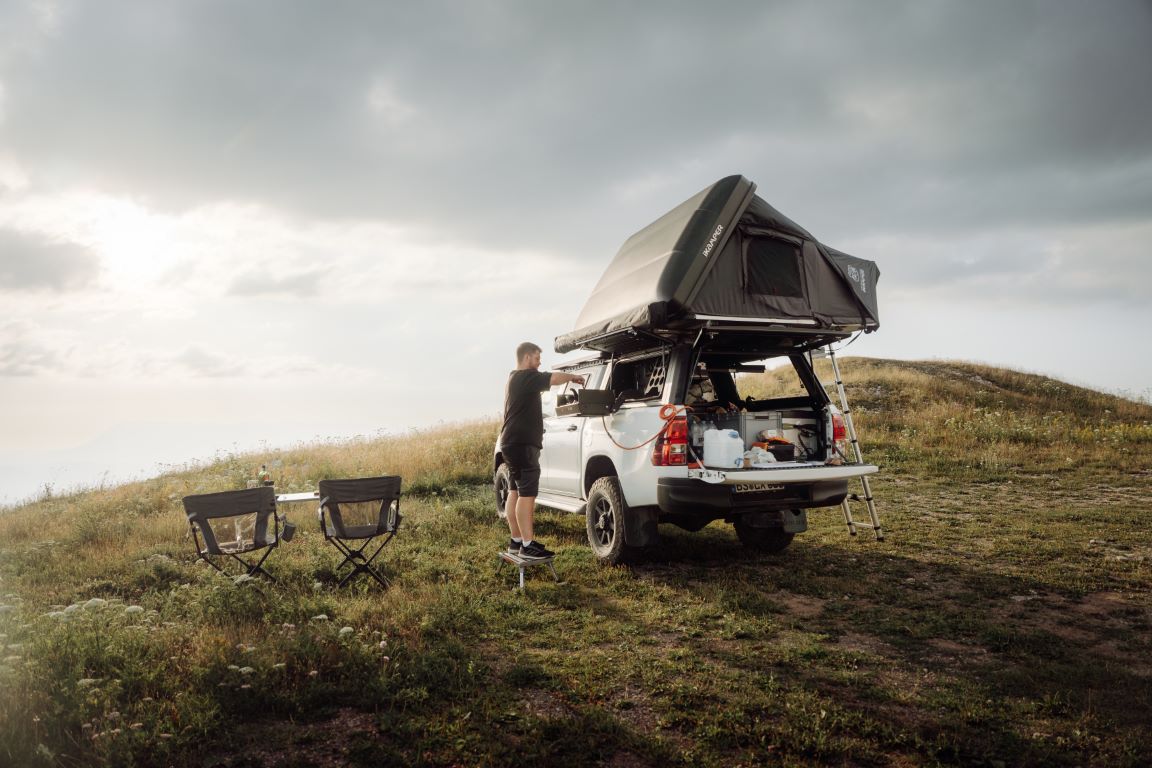
A solo adventure in a roof tent is simply ultimate freedom: just drive off, enjoy nature, and discover new places without compromise that only you need to love. But that’s only enjoyable and exciting if you can comfortably climb into a securely mounted roof tent in the evening. Many solo travelers therefore ask themselves: Can you even install a roof tent by yourself, for example, if you don’t live near your supplier or are on a budget trip? Yes, you can! And it’s not as complicated as you think.
.
Camping Guide
Quick answer: Can you travel alone with a roof tent?
Traveling alone with a roof tent is no problem!
What you need:
- The right roof rack: Important for safety and stability!
- A step-by-step guide with a few simple tricks to ensure the setup is successful the first time (you’ll find it in this article)
- A model suitable for solo setup and takedown (preferably a hardshell)
Traveling alone in a roof tent: Free and safe on the go
For solo travelers, a roof tent offers many advantages:
Freedom:
You are flexible, can spontaneously change locations, and don’t have to adapt to others.
Comfort:
Even in the smallest pitches, you have a comfortable sleeping area that protects you from moisture, cold, or curious glances.
Nature & Peace:
Anyone who has spent a night in a roof tent knows how much fun it is to sleep alone in nature, enjoy the sunrise, and have the peace to yourself.
Independence:
Once you’ve learned how, you can rely on the secure feeling of being able to set up and take down your own roof tent at any time. Without necessarily needing another person!
With a little practice, setup and takedown can be done within minutes, giving you more time for your adventure.
In the following sections, we’ll show you step-by-step how to install your roof rack and roof tent by yourself, what to look out for, and what tips will make your solo adventure even more enjoyable.
Preparation: Why a roof rack is indispensable
The most important foundation: the roof rack! This is the first step you need to take, even before getting to the actual roof tent. Logically: without a roof rack, installation is not possible, and the tent cannot be securely attached to your car. A roof rack distributes the weight of the tent evenly across your vehicle roof and ensures that everything sits firmly and stably.
Roof rack options
Roof racks are available for all vehicle types, of course.
Important: Make sure that your car’s maximum roof load is observed to avoid damage to the vehicle.
However, it doesn’t just depend on the vehicle type, but also on how you want to travel and use your roof tent. Modular roof racks, for example, can be removed if needed or used for different tents, while others are permanently mounted.
Solo travelers should prioritize simplicity and speed of installation. This saves you time and energy and allows you to focus on what matters most: your trip.
Choose the right roof rack for your roof tent!
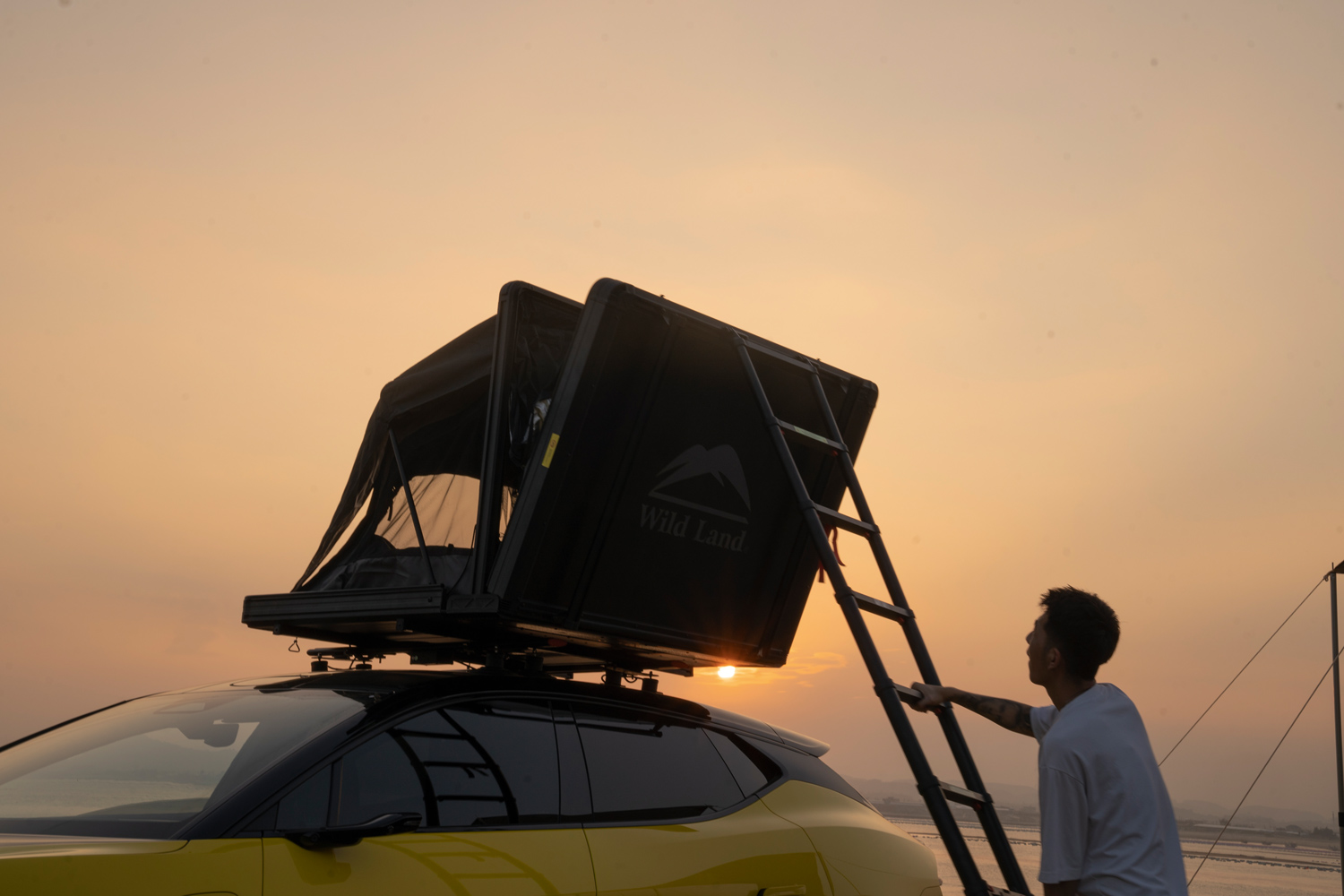
Installing the roof rack alone
Installing the roof rack by yourself is perfectly doable if you proceed systematically and follow all necessary steps.
With this step-by-step guide, you’ll be on the safe side:
1. Tools
First, you should prepare the right tools.
These include:
Wrench, ratchet, tape measure, and a spirit level.
If you have additional rubber buffers or washers, this will make alignment easier and protect the vehicle’s paintwork.
2. Surface
Park your car on a level surface. A stable ground is important so that the rack sits straight and the screws can be tightened correctly.
3. Align the rack
Start by aligning the rack centrally on the roof. Make sure it runs parallel to the vehicle’s axis.
4. Follow the installation instructions
Then, attach all connections according to the instructions and retighten the screws.
5. Check
A final check of all steps gives you the assurance that your roof rack is stably prepared for the roof tent.
Installing the roof rack alone
Once the roof rack is securely installed, it’s time for the roof tent itself.
Tip for choosing your tent: For hardshell tents, like those offered by CAMPWERK, the setup is particularly easy.
Here, too, we’ll go through it step by step together:
Slide the roof tent onto the rack
To get the tent onto the rack by yourself, you can use aids like small ramps or mounting systems. These significantly facilitate lifting and positioning.
Secure
After the tent is on the rack, secure it at all attachment points and retighten the screws.
Check
A thorough final check is crucial here to ensure the tent stays securely in place even when driving or in windy conditions. Once practiced, you’ll develop a feel for the correct positioning and optimal fastening, making the setup quick and hassle-free.
Find an affordable roof tent for your solo trip!
Roof tent setup for the night: Opening the tent alone
Mounting the tent is usually a one-time thing.
If you’re traveling alone, you’ll then need to open it for the night or fold it up for continued travel.
But don’t worry: if you follow a few simple tips and tricks, you can start your evening stress-free:
Tips: How to set up your roof tent alone for a night
Tip 1: Choose a hardshell tent, as these can be opened in just a few minutes.
Tip 2: Choose a sheltered spot to make the setup easier.
Tip 3: Use the integrated ladder, as it ensures safe entry and exit.
Tip 4: It’s best to always open and close the tent in the same order. This way, you quickly develop a routine that saves time and makes the setup relaxed.
Tip 5: In rain or strong winds, you can use a protective cover to shield the tent until you have set up your camp.
Taking down the roof tent and storing it safely
Taking down the roof tent then proceeds in the same way, just in reverse order. It’s important that the tent is completely dry before you fold it up. Be precise here, otherwise moisture in the tent can cause mold!
It can then be stored in the supplied bag or protective cover. This keeps your tent clean and protected until you need it next time.
Takedown also works alone in a few minutes and gets a little faster each time!
Tips for solo travel with a roof tent
Traveling alone with a roof tent means maximum freedom. Because you alone decide when to leave, where to stay, and how long to stay. A few simple routines and the right equipment will help ensure your solo roof tent adventure runs smoothly.
Preparation is everything
- Consider in advance which roof tent best suits you. Hardshell roof tents from CAMPWERK, in particular, are practical for solo travelers as they can be opened extremely quickly.
- When packing, make sure to only take what’s necessary. The lighter your car remains, the simpler the setup will be.
- Before departure, double-check that the roof tent is correctly attached. A quick check saves you stress on the road.
The right route for your roof tent trip
The best thing about solo travel with a roof tent is the spontaneity. You are independent, can sleep somewhere different every night, and don’t have to coordinate with anyone.
Popular destinations for solo travelers include Sweden with its endless forests and tranquil lakes, Norway with its spectacular fjords and mountains, or even Germany, which offers many diverse landscapes.
Pitches for overnight stays in a roof tent
Inform yourself about pitches or camping options along your route. Especially when you’re traveling alone, knowing where you can stay overnight gives you peace of mind. Whether it’s an official campsite, pitches by the lake, or designated spots in nature – with a roof tent, you always have your bed with you and remain flexible.
The best roof tents for your solo trip
At CAMPWERK, there are various models that are perfect for solo travelers. Here’s an overview of the top roof tents for solo travelers in 2025:
1.
Skycamp Mini Roof Tent
What is it particularly well suited for
The Skycamp Mini is the model for you if you’re traveling alone and want to be as compact as possible, but still don’t want to miss out on comfort and functionality. It’s ideal if you frequently change locations, want minimal storage space, and are still looking for a solid roof tent that’s easy to handle.
2.
iKamper Skycamp Roof Tent
What is it particularly well suited for
This model is perfect if you often take longer trips or want a bit more comfort. Space and features are more generous, giving you plenty of freedom of movement on the go. It’s also suitable if you occasionally have someone with you or want more daytime usable space.
3.
X-Cover Roof Tent
What is it particularly well suited for
The X-Cover is the model for you if you want maximum space, whether for sleeping, resting, or simply so that everything can still happen relaxed in the tent even in bad weather. It’s ideal if space and comfort are more important than minimal packing size.
4.
iKamper BDV Solo Roof Tent3.
What is it particularly well suited for
The iKamper BDV roof tent is the right choice for you if you value adventure and robustness. It is specially developed for outdoor enthusiasts who want to easily attach their equipment such as MTB, kayak, or even a solar panel. With its practical mounting rails and robust hardshell, you are perfectly equipped for self-sufficient tours in remote natural areas.
| Model | Sleeping surface | Pack size (closed) | Dead weight | Assembly time | Load capacity | Special features | Suitable for |
| Skycamp Mini | 130 × 210 cm | 145 × 138 cm | approx. 57 kg | approx. 1 min. | 410 kg | Very compact, panoramic window, mattress, ladder | Ideal for solo adventurers looking for a light, fast tent |
| Skycamp | 197 × 203 cm | 217 × 139 cm | approx. 74 kg | approx. 1 min. | 410 kg | Plenty of space, panoramic window, comfortable mattress | Perfect for solo travelers who want more comfort or space |
| X-Cover | 230 × 190 cm | 195 × 120 cm | approx. 55 kg | approx. 3 min. | 410 kg | Huge sleeping area, roof rack expandable, PVC tarpaulin | Optimal for solo travelers with a lot of luggage or longer stays |
| iKamper BDV | 96 x 213 cm | 102 x 228 cm | 58 kg | In 15 seconds | 410 kg | Robust hardshell, mounting rails for equipment | Ideal for solo adventurers who value robustness and outdoor equipment |
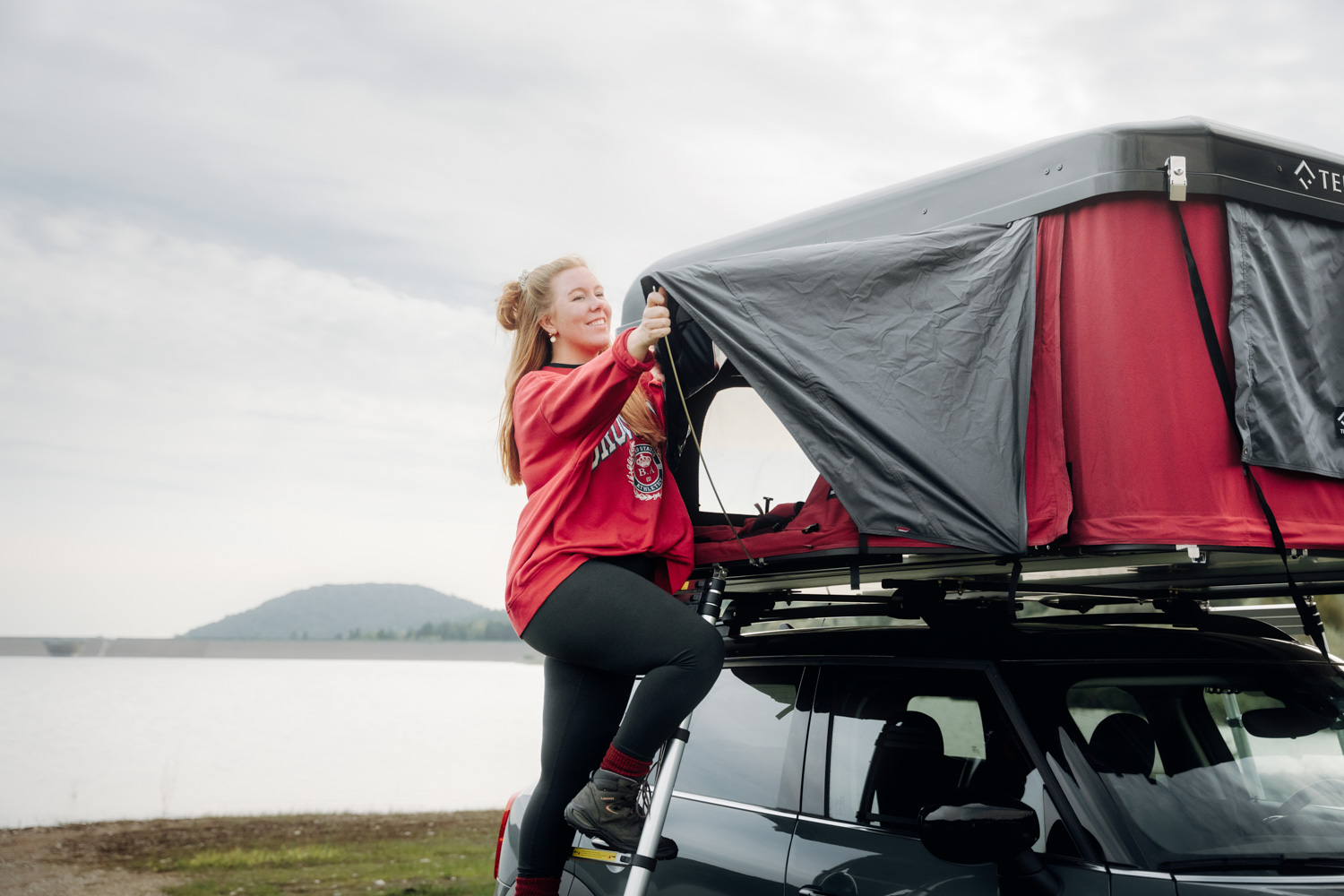
Conclusion: How to succeed in a solo adventure with a self-installed roof tent
With a roof tent, you can travel exactly how you love it: freely, yet safely, and right through nature.
With the right preparations, a suitable roof rack, and a little practice, you can easily install your tent by yourself.
At CAMPWERK, you’ll find high-quality tents, the right accessories, and expert consulting, so your solo adventure starts relaxed from the beginning – and you don’t end up stressed with setup and takedown somewhere in a beautiful spot.
Even if you’re unsure the first time, the team will gladly support you so that your roof tent sits securely on your car and you can concentrate on what matters most: your journey and time in nature.
Discover the best roof tent for you now!
FAQ – Frequently Asked Questions about installing a roof tent alone
1. Can I install any roof tent by myself?
Not every model is suitable for solo setup. When buying, pay attention to manufacturer’s instructions and choose a model that is easy to handle.
2. How heavy is a roof tent?
The weight varies depending on the model. A Skycamp Mini, for example, weighs about 57 kilograms, which can be easily installed alone with a little practice.
3. Do I need special tools for installation?
Usually, a wrench or ratchet, tape measure, and spirit level are sufficient. For some models, small aids like rubber buffers can help.
4. How long does it take to set up a roof tent?
With a hardshell tent like the Skycamp Mini, setup, including the ladder, takes only a few minutes. Routine makes it even faster.
5. Can I also mount my roof tent on a van?
Yes, many models are compatible with vans. Make sure the roof rack is correctly installed and the roof load is appropriate.
6. Do I need help with the setup?
No, with the right tools and a little practice, you can easily manage the setup alone.
7. How do I prevent the tent from tipping over when opening?
Choose a level spot and check the fastenings. Hardshell tents are particularly stable and rarely tip over.
8. Do I have to clean the tent after every use?
It is recommended to remove dirt and moisture to protect the material. Regular ventilation prevents mold growth.
9. Can I use the roof tent in strong winds?
Hardshell tents offer good protection, but in extreme weather, you should check stability and, if necessary, choose a sheltered spot.
10. How do I transport the tent when I take it down?
When folded, the tent fits into the supplied bag or protective cover and can be easily stored on the roof or in the car.
11. Is a roof tent suitable for short trips?
Absolutely, roof tents are flexible and suitable for both weekend trips and longer journeys.
12. Is a hardshell tent worth it for solo travel?
Yes, hardshell tents are quick to set up and take down, offer protection and comfort, and are ideal for solo adventures.