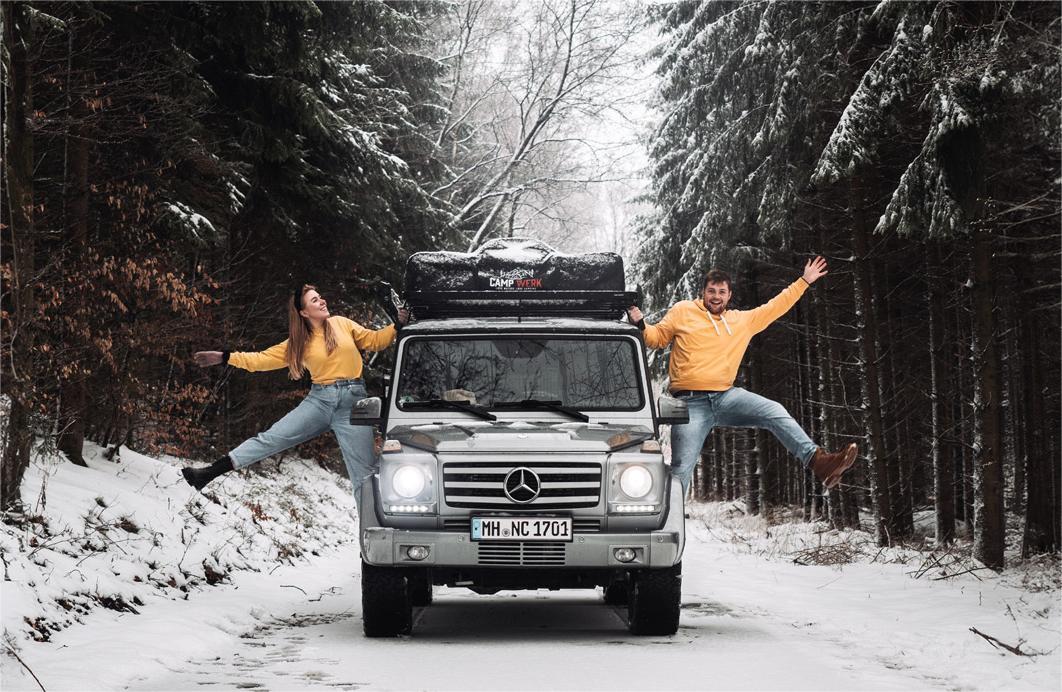
The snow crunches under your shoes. Silence is in the air. From the roof tent, you look into a clear sky – no streetlights, no noise, just a white landscape and your own breath. That’s what winter camping feels like when you’re away from everyday life.
More and more campers are discovering just that: roof tenting in winter. Whether for a weekend in the snow or longer tours through cold regions: With the right setup, the roof tent becomes a cozy place to sleep. Even in frost, wind, and low temperatures.
But how does roof tenting in winter work when it’s freezing outside? What equipment do you need to stay safe and dry? And what should you pay attention to when it comes to sleeping arrangements, accessories, and preparation?
In this article you will find:
- an overview of suitable roof tent models for winter
- practical tips on insulation, heating and moisture prevention
- Recommendations for equipment such as thermo inner tent, heating blanket, floor panel, insulating mat
- Information on safe use in wind, snow and low temperatures
.
Camping Guide
Roof tent winter: The most important things at a glance
- Not every roof tent is automatically suitable for winter, but many can be retrofitted with a thermo inner tent, heating blanket or insulating mat.
- Good thermal insulation starts with the sleeping arrangements: mattress pad, insulating mat and sleeping bag are crucial.
- When heating, safety is the top priority: don’t forget CO detectors and ventilation.
- The vehicle also needs attention: check the roof load, pack snow chains, check the power supply.
- Whether it’s the South of France or a ski touring spot in the Alps – winter camping with a roof tent is possible in many regions of Europe.
- The right planning and preparation turn a cold night into a real outdoor adventure with peace, nature and starry skies.
Is a roof tent suitable for winter?
The short answer: Yes. With the right equipment, suitable accessories and a few targeted preparations, almost any roof tent can be used in winter. The crucial factor is how well the tent is protected against cold, wind and moisture.
Material & Construction
Basically, a distinction is made between two types of construction: softshell roof tents with textile walls and hard-shell models with a solid outer shell.
- Hard-shell roof tents offer better protection against wind, snow and cold air when winter camping. They close tightly, retain heat better and are less susceptible to moisture.
- Softshell tents have advantages in terms of space and can often be combined with an awning or a thermo inner tent. For roof tenting in winter, however, you need more insulation and additional equipment such as a floor panel, a good insulating mat or a heating blanket.
- Hybrid roof tents combine the advantages of both variants: compact setup, good thermal insulation, expandable with accessories such as an inner tent or heating. Thanks to their small pack size and easy setup and dismantling, they are well suited for winter camping. Especially when weight and space in the vehicle are important.
The following applies to all types of construction: With the right preparation and equipment, almost any roof tent can be made suitable for winter.
What you should pay attention to
If you want to be winter-proof with your roof tent, pay attention to:
- Tight zippers and clean seams
- Good thermal insulation, e.g. through an additional inner tent
- Ways to reduce condensation in the tent
- Compatibility with fan heaters, hot water bottles or a heating blanket
How cold can it get?
You can sleep safely in a roof tent even when the temperature is below zero. It is not only the tent that is decisive, but above all the sleeping equipment. A well-insulating winter sleeping bag, a suitable insulating mat and a protected sleeping place are the basis for a restful night in the cold.
In the event of severe frost, persistent snowfall or longer tours during a winter vacation, additional measures should be taken to provide thermal insulation. For example, with a thermo inner tent, an additional floor panel or a heating blanket. This keeps the heat in the tent better and moisture has less chance of collecting inside.
Warmth & insulation: This is how the roof tent stays warm
Anyone traveling in a roof tent in winter at low temperatures must do one thing above all: keep the heat in and the cold out. With the right insulation, suitable heating methods and sensible equipment, this is possible even in frost and snow.
Insulation: Protection against cold and condensation
- A thermo inner tent ensures that less warm air escapes and less moisture forms in the tent. It is easy to put in and noticeably improves thermal insulation.
- The floor is often the coldest place. An insulating mattress pad, an additional floor panel or a thick insulating mat prevent cooling from below.
- Windows and ventilation openings should be adjusted so that a little air circulation remains – this helps to avoid condensation without losing too much heat.
Heating in the roof tent: What works on the go?
- A heating blanket, operated with a power bank or 230V connection, offers a simple way to warm up the sleeping area. Especially in the evening before going to bed.
- A classic hot water bottle helps specifically where it gets cold quickly: on the feet, in the back or in the neck area.
- Anyone working with other heat sources such as gas should definitely ensure adequate ventilation – and ideally take a CO detector with them.
Sleeping in the cold: That makes the difference
- A down sleeping bag with a comfort range down to around –10 °C is recommended for winter camping.
- In addition, a warm down blanket can provide more warmth in the tent – especially on long nights.
- Several thin layers of clothing keep you warmer than a thick jacket. This way you can take something off or put it on depending on the weather and stay dry when you sweat.
Camping with a roof tent in winter: Tips & experiences
Finding a good pitch
When winter camping, you should set up your roof tent where you are protected from the wind. Ideally behind a hedge, wall or natural terrain edge. Avoid places under trees, especially in heavy snow. Falling branches or snow load can damage the tent or become dangerous.
The ground should be as level as possible. Fresh snow can be compacted to create a stable surface. This is important for a secure footing and dry access to the sleeping area.
Dealing with moisture correctly
Roof tents with fabric walls should never be packed up wet. If you are traveling on, only stow the tent briefly and dry it completely later. Ideally at home in the carport, in the garage or with the tent open in the garden.
A special anti-condensation mat helps against moisture under the mattress. It allows air to circulate and prevents condensation from collecting.
Everyday tips for winter camping
- Shoes should stay outside. For example, in a stackable plastic box with a lid. This keeps the interior clean and dry.
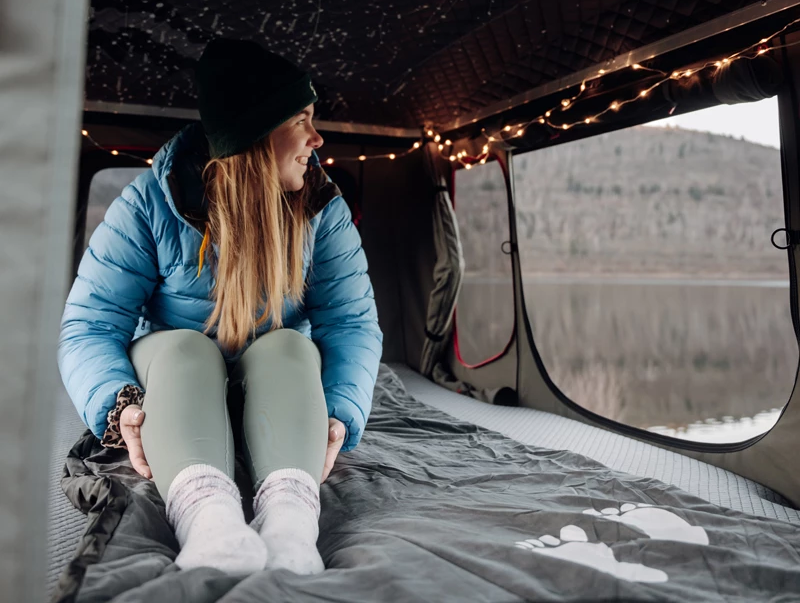
- Fairy lights, a soft blanket and a small pillow make the tent more comfortable. Especially after a long day in the snow.
- A simple dinner with lots of warmth, such as soup or stew, helps to maintain body temperature.
What other winter campers report
Outdoor YouTuber Fritz Meinecke has tested winter vacations in a roof tent himself. In sub-zero temperatures, snow and darkness, he documented his experiences in a detailed video. He particularly emphasizes:
- Wildlife watching in remote nature
- sufficient space in the roof tent for sleeping (significantly more than in the car)
- and the importance of good preparation and well thought-out equipment
Anyone who is prepared when camping in winter will experience the outdoor adventure more intensely than in any other season.
You can watch the whole video here: Roof tent camping in winter at -11°.
Vehicle preparation for the roof tent in winter
When roof tent winter camping, it is not only the equipment in the tent that is important. The vehicle itself must also be prepared for the cold season. Good preparation is particularly important when traveling in snowy regions or on longer tours with the roof tent in winter.
Tires, snow and driving behavior
For safe camping in winter, you need suitable winter tires or robust all-terrain tires. On steep stretches, icy roads or deep snow, snow chains are a useful accessory. Especially if you park remotely or are traveling off-road. Many vacationers underestimate how much the driving behavior can change with additional weight on the roof.
Power supply & heating blanket
Anyone who uses electric heating blankets, fairy lights or a small heater in the roof tent should think about an additional battery. Especially at low temperatures, the capacity of the vehicle battery is often quickly at its limit. A power station or on-board battery can be useful. For example, to warm up the inner tent or operate the equipment.
Protection against cold and frost
An anti-freeze agent in the windshield washer system, a cover for the windshield and a good lock de-icer are part of the basic equipment for winter camping with a car. If you are traveling in strong wind or freezing rain, you should not forget these small products, because they save time and nerves in the morning.
Roof load and snow on the tent
For cars with a roof tent, the distribution of the roof load changes due to snow, frozen water or ice on the accessories. Check regularly whether the roof rack is firmly in place and shows no cracks, play or loose screw connections. The tent should be free of snow before every trip – for safety reasons and to avoid unnecessary stress.
Roof Tent Winter Camping in Europe: Destinations and Inspiration
Not every tour with the roof tent in winter has to start in ice and snow. In Europe there are many regions where camping is possible even at low but tolerable temperatures. If you plan specifically, you can choose between sunny destinations in the south and real snow adventures in the mountains.
Mild temperatures: Spain & Southern France
The Costa del Sol in Spain or Provence in southern France are popular destinations for winter camping if you don’t want it to get too cold. Even in January, temperatures there are often above 10 °C.
What you need:
- a simple thermo inner tent or an insulating insulating mat
- a light heating blanket or hot water bottle
- a protected sleeping place in the tent and good air circulation to avoid moisture

Snow & cold: Winter camping in the Alps
If you want to experience roof tenting in winter as a real outdoor adventure, the Alps are the place to be. Places like Kühtai (Austria), the Allgäu (Germany) or smaller ski touring spots offer ideal conditions for camping in the snow.
Important preparations:
- Snow chains, winter tires and stable pitches
- additional insulation through an inner tent
- a sleeping bag that is suitable for double-digit sub-zero temperatures
- Check the roof load and accessories, especially in heavy snowfall
Every layer counts here: from the roof tent mattress to the floor panel to the last zipper.
Two winters – two possibilities
- In Southern Europe, simple equipment is often sufficient to sleep comfortably in the roof tent even during a winter vacation.
- In the Alps, you need well thought-out equipment and careful preparation to cope well with cold, wind and moisture.
Regardless of whether you are traveling in warmer regions or looking for a snow experience: with the right know-how and the right equipment, winter camping is feasible throughout Europe.
Safety when winter camping in a roof tent
Roof tent winter camping is not just about equipment and warmth, but also about the right behavior in cold, snow and the use of heating. Anyone who wants to sleep in a roof tent in winter must pay attention to a few important things. Especially when it comes to health, pitch selection and safe heating in the tent.
Heating in the roof tent: What is allowed – and what is not?
Can you suffocate when heating in the tent? The short answer: No, if the car’s engine is not running and enough air can circulate in the tent. It only becomes critical when working with gas heaters. Then you absolutely need a CO detector.
Electrical aids are safer:
- a heating blanket with a power bank
- a small fan heater with automatic shut-off
- combined with a thermo inner tent, insulating mat and insulated floor panel
These products warm up the roof tent in winter – without any risk.
Cold protection: How to protect yourself from health consequences
Longer stays in sub-zero temperatures challenge the equipment and the body. To avoid frostbite:
- several layers of clothing instead of a thick jacket
- dry, insulated shoes
- Hot water bottle in the sleeping bag
- breathable clothing to avoid moisture
- warm blanket for extra warmth
Pitch: Keep an eye on snow and roof load
Never put your roof tent under trees with a high snow load. Wet snow, icy branches or sliding mass can become a danger: for the tent, the car and for you.
Also pay attention to the roof load:
- Remove snow from the tent before each trip
- Regularly check the mounting of the roof rack
- Check screw connections – especially when ice forms
Accessories for the roof tent in winter
The colder it gets, the more important the right accessories become. When it comes to roof tents in winter, it’s not just about warmth, but also about protection from moisture, snow, iced vehicle parts and the correct handling of the equipment.
Warmth & sleeping comfort
The following products have proven their worth when winter camping with a roof tent:
- a thermo inner tent that significantly improves thermal insulation in the sleeping area
- a heating blanket (ideally with battery or power bank) for permanently warm nights – even without shore power
- a winter sleeping bag with a comfort range down to –10 °C and an additional blanket or hot water bottle
A good insulating mat or mattress pad is also important to minimize heat loss through the floor panel.
Practical tools for everyday life
When roof tenting in winter, many small helpers make everyday life easier:
- Frost-proof cool boxes or a compact outdoor refrigerator for perishable food
- an annex for additional storage space, wind protection, and for stowing wet clothes or shoes
- Anti-condensation mats or dry bags to keep moisture away from sleeping bags and clothing
Vehicle accessories for cold regions
Especially when driving in high-altitude regions or in heavy snow, the car also requires preparation:
- Snow chains are mandatory in many ski touring spots and often essential
- Windshield covers keep ice away and save time in the morning
- a engine pre-heater or special diesel protection prevents starting problems in low temperatures
Which roof tents are suitable for winter?
If you want to spend your winter holiday in a roof tent, you need a roof tent that is suitable for winter. Especially for winter camping in a roof tent, thermal insulation, accessories, and the right equipment are crucial. Whether it’s snow, wind, or icy temperatures.
Here you can find out what to look for if you want to find an affordable roof tent.
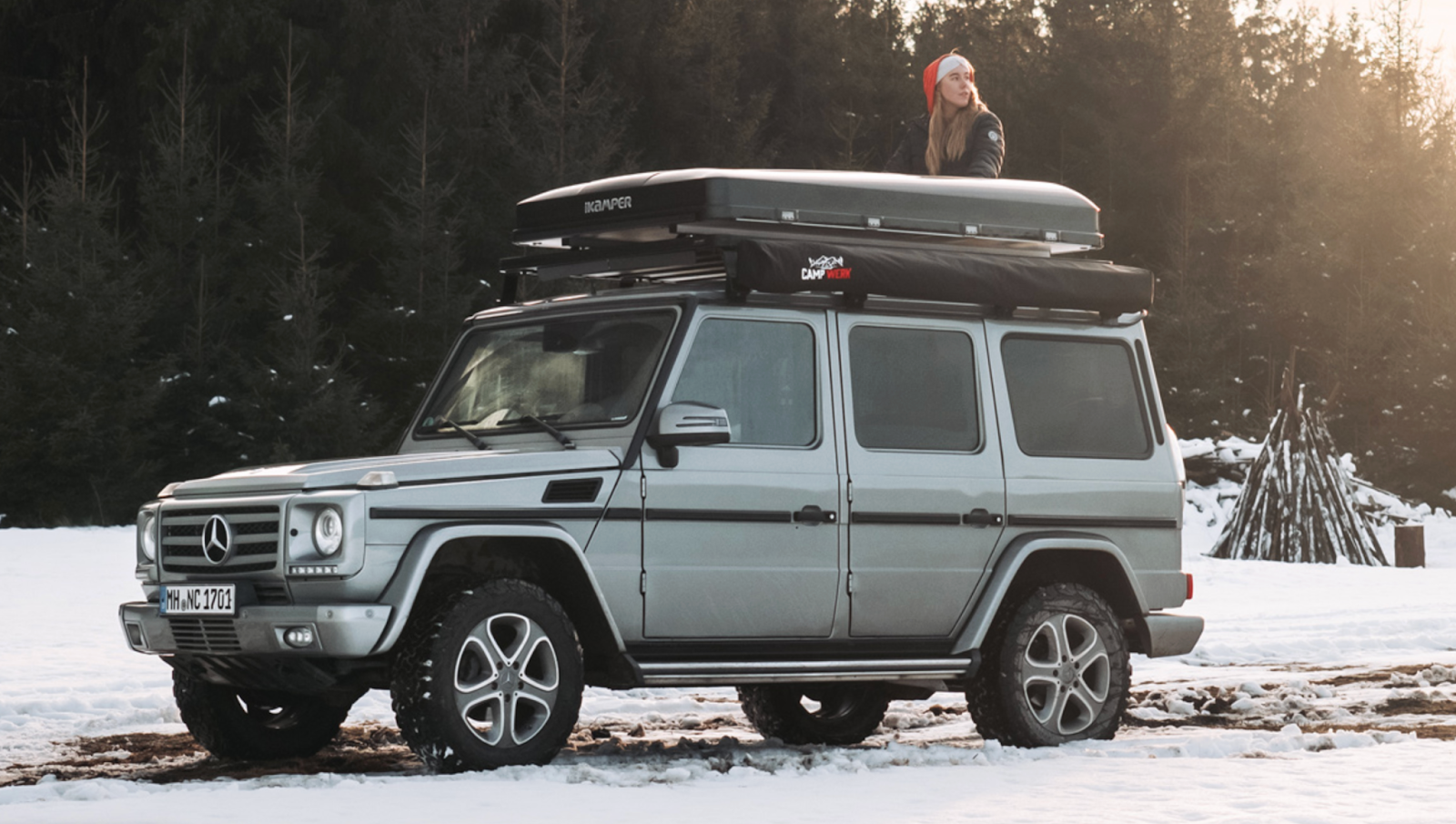
At CAMPWERK, Germany’s largest roof tent expert since 2010, you will find a wide selection of roof tents suitable for winter roof tent camping. Three models have proven particularly effective:
1.
CAMPWERK Adventure
Folding roof tent for 2–3 people
The CAMPWERK Adventure is a proven model for winter camping with a roof tent. The large sleeping area offers enough space for two to three people and additional storage for sleeping bags, hot water bottles, heated blankets, or other accessories.
Why suitable for winter?
- Expandable with thermal inner tent to increase thermal insulation
- Compatible with sleeping pad, base plate, anti-condensation mat, and additional blanket
- Good ventilation options to prevent moisture inside
Click here for the Adventure roof tent
2.
CAMPWERK Dark Barracks
Hybrid roof tent with aluminum walls for 2–3 people
The Dark Barracks is the most spacious roof tent for winter in the CAMPWERK range. Its construction with solid aluminum wall elements offers significantly better protection in sub-zero temperatures. The dark interior makes sleeping comfortable even with early morning sun or reflective snow.
Why suitable for winter?
- Ideal for longer winter camping stays due to its setup with reinforced sides
- Ample space for thick winter sleeping bags, inner tent, heated blanket, hot water bottle, and other winter products
- Plenty of room for sleeping, storage, and camping, even in stormy winter weather
Click here for the Dark Barracks roof tent
3.
CAMPWERK Skycamp (Hardshell)
Hardshell roof tent for 2–4 people
The Skycamp is a hardshell roof tent specifically designed for winter roof tent camping. The solid outer shell protects against snow, wind, and lower temperatures. The setup is quick, taking only a few seconds, even with gloves and cold fingers.
Why suitable for winter?
- High protection against cold and drafts due to continuous hardshell
- Quick to deploy, ideal for sudden snowfall or at ski touring spots
- Internally compatible with thermal inner tent, heated blanket, sleeping pad, and other equipment
Click here for the Skycamp roof tent

.
With these three models, you are well prepared for winter with a roof tent. Whether you want to camp in the Alps in the snow or spend the night in the south in mild temperatures. Each model can be supplemented with additional accessories for winter camping. For example, with a thermal inner tent, mattress insulation, or a heated blanket.
Discover all CAMPWERK roof tents
Conclusion: Why a roof tent winter Adventure is unforgettable
What you need for winter camping in a roof tent
If you’re out and about in a roof tent in winter, you need more than just warm clothes. Crucial elements are:
- a winter-proof roof tent with dense material and stable construction
- useful accessories like a thermal inner tent, heated blanket, anti-condensation mat, hot water bottle, sleeping pad
- well-thought-out ventilation and insulating base plate to prevent moisture
- a prepared car with controlled roof load, winter tires, and optional power system
Which roof tents are suitable
Not every model is automatically winter-proof, but many can be adapted with accessories. Particularly suitable for winter roof tent camping:
- CAMPWERK Adventure: Folding roof tent for 2–3 people, combinable with a thermal inner tent
- CAMPWERK Skycamp: Hardshell model for quick setup and takedown in wind and snow
- CAMPWERK Dark Barracks: Hybrid tent with aluminum walls, plenty of space, dark interior, and high insulation
Discover all CAMPWERK roof tents
The advantages of roof tent winter camping
✅ more nature: fewer people, clear views of the stars and the sky, quiet nights
✅ more space: you sleep much more comfortably in the tent than in the car
✅ more freedom: travel wherever you like – whether in Southern France or the Allgäu
✅ a true outdoor Adventure without crowded campsites
Those who prepare well, invest some time in the right equipment, and can withstand a bit of cold will be rewarded with a real roof tent winter adventure.
Frequently Asked Questions about Roof Tent Winter Camping
Can I camp in winter with any roof tent?
Not every roof tent is directly winter-proof. However, with the right preparation, a thermal inner tent, an insulating base plate, and a good sleeping bag, almost any tent can be equipped for winter roof tent camping. Many CAMPWERK roof tents can be equipped for winter camping with suitable winter accessories – such as a thermal inner tent, a heated blanket, or an insulating mattress pad. This way, the roof tent becomes a safe and warm shelter in winter.
How do I stay warm in a roof tent in sub-zero temperatures?
Warmth is crucial in a roof tent in winter. This helps:
- a thermal inner tent for thermal insulation
- a high-quality sleeping pad or floor insulating mat
- a sleeping bag with a comfort rating below zero degrees
- a battery-powered heated blanket or hot water bottle for cold nights
CAMPWERK offers special winter accessories for many tents, precisely tailored to these requirements.
What equipment do I need for winter camping in a roof tent?
A safe sleeping place in freezing temperatures requires more than just a warm sleeping bag. The following equipment is essential:
- thermal inner tent, anti-condensation mat, fan heater with CO alarm
- shoe boxes or tarpaulins for protection against moisture
- a functional ventilation system against moisture
- multiple layers of clothing for changing temperatures
How do I prevent condensation in the roof tent?
Condensation occurs due to breath and temperature differences. Here’s how to avoid it:
- leave windows slightly open (even in the cold)
- place an anti-condensation mat under the roof tent mattress
- store dry clothes separately
- ensure air circulation
A good thermal inner tent and regular ventilation are fundamental rules for winter camping.
Where can you travel well with a roof tent in winter?
Depending on your taste, different regions are suitable:
- For sun and mild temperatures: Southern France, Spain, Portugal
- For a real outdoor Adventure in the snow: Alps, Allgäu, ski touring spots
CAMPWERK roof tents are suitable for both options. Whether you prefer to camp in the south or drive your car into the winter high mountains.
What do I need to consider for my car in winter?
When winter camping, your car is just as important as your tent:
- Winter tires and, if necessary, snow chains are mandatory
- Antifreeze for the water system and windshield washer system
- Battery care if you use lights or a heated blanket
- Observe roof load: Additional snow can increase the weight on the roof
CAMPWERK recommends transporting heavy equipment in the trunk if necessary to reduce the load on the roof.
Which CAMPWERK roof tents are particularly suitable for winter?
These three CAMPWERK models have proven particularly effective for winter roof tent camping:
- Adventure: Folding roof tent for 2–3 people, combinable with a thermal inner tent
- Skycamp: Hardshell roof tent with high thermal insulation and quick setup
- Dark Barracks: Hybrid roof tent with solid side walls, plenty of space, dark interior, and robust insulation
All models can be expanded with winter accessories and offer ample space for sleeping bags, blankets, inner tents, heated blankets, and more.
Is winter roof tent camping dangerous?
No. With good preparation, winter camping with a roof tent is safe. Pay attention to:
- safe heating methods (no gas without ventilation)
- pitching away from snow-laden branches
- regular removal of snow from the roof and tent
- CO alarm for electric fan heaters