
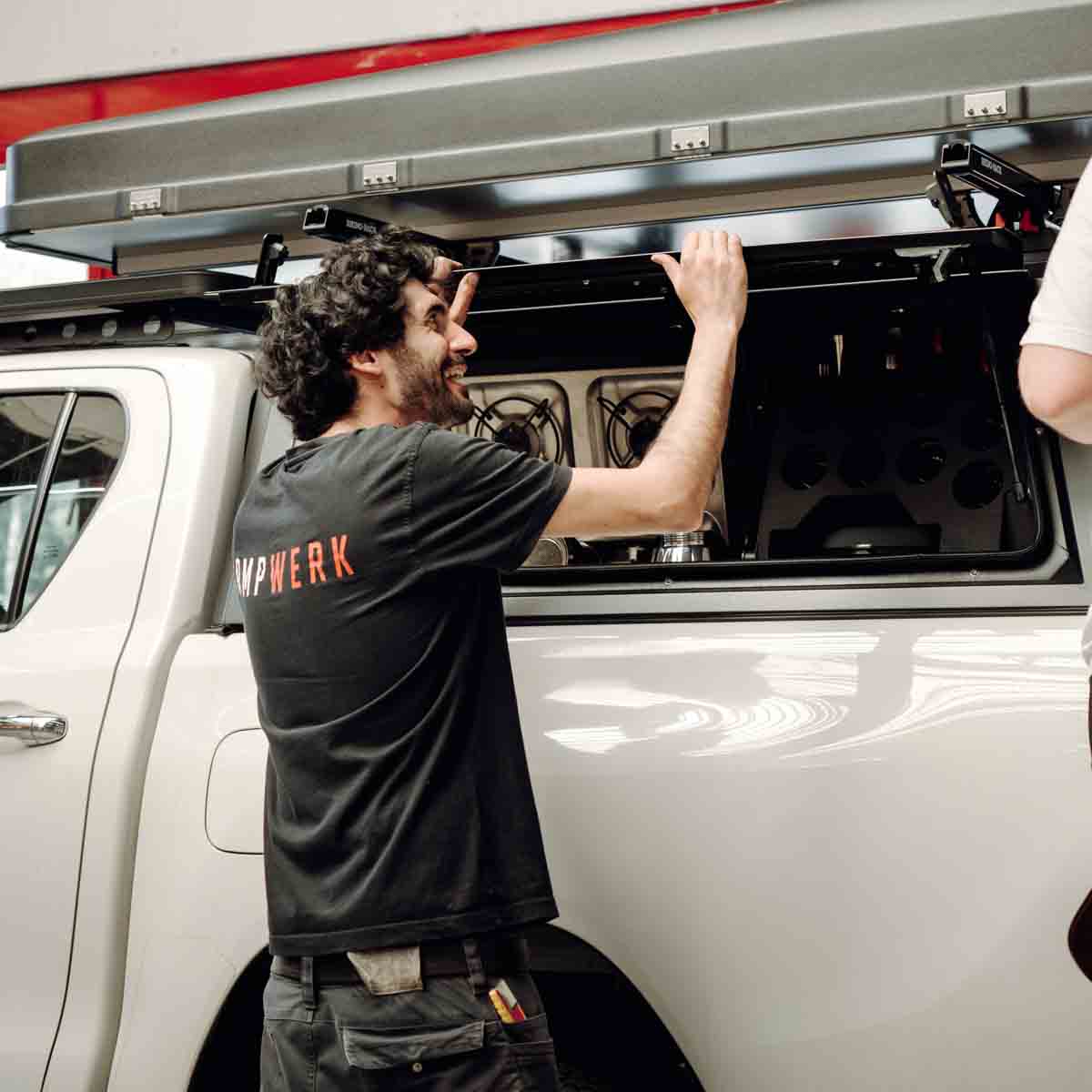
You want to buy a roof tent to take your camping trips to the next level? Then be careful – there are some crucial points you should consider:
- The maximum roof load
- Choosing the right roof rack to match the mounting options on your vehicle
- The correct installation
Incorrect attachment or exceeding the roof load can not only affect the stability of your vehicle but also endanger your safety. Especially at higher speeds or on winding roads, an insecure roof rack can destabilize the vehicle and negatively affect handling. This could lead to a loss of control or even cause accidents. Also a incorrect weight shift on the roof can affect handling, which has a negative impact on road holding and braking force.
The consequences: A damaged vehicle, high repair costs and possibly fines.
If your roof tent comes loose while driving, your adventure can quickly turn into a nightmare.
That’s why in this guide, we’ll show you how to avoid these mistakes from the start and install your roof rack safely. We’ll explain how to choose the right roof tent for your vehicle, which legal regulations you have to comply with and how to carry out the installation step by step so that you can enjoy your trip without worry.
Camping Guide
The most Important Things in Brief
In this article, you will learn how to mount your roof tent safely and stably so that you can enjoy your trip without worries. The most important points include:
- Choosing the right roof rack: Make sure that the rack is suitable for the roof load of your vehicle and the mounting options on your vehicle. The roof tent and rack together must not exceed the permissible weight of your vehicle.
- Avoid mistakes during installation: Incorrect attachment of the roof rack or the roof tent can negatively affect the handling of your vehicle, lead to instability and endanger safety.
- Roof tent selection: Consider the roof load, the weight of the tent and the size that suits your vehicle and your needs.
- Different types of roof racks: There are different types of racks such as crossbars, platform racks and rain gutter racks, depending on the vehicle type and equipment.
Roof Rack for Roof Tent: on which Vehicle Can it be Mounted?
Basically: A roof tent can be mounted on almost any vehicle – regardless of the brand. Whether you have a roof tent for your Audi, a VW roof tent or a suitable Land Rover roof tent – most vehicles offer the possibility to install a roof tent. There are also roof tents for BMW or you mount a roof tent on your Ford.
However, there are differences in the attachment depending on the vehicle type and equipment. For some vehicles, it is necessary to use special roof racks or roof rails, which serve as a basis for the installation. Therefore, before buying a roof tent, you should make sure that your car is suitable for it.
What many don’t know: The size of your roof tent doesn’t matter much. Whether you choose a tent for one person or a larger model for 2, 3 or even 4 people, it has no influence on the mountability. All variants have a small pack size and dead weight. This means: You can easily transport a roof tent on your vehicle without it taking up much space or additional weight.
However, it is important:
❗ Without a roof rack, installation is not possible! ❗
Before you buy a roof tent, make sure that your vehicle can mount roof racks. Because without the right base, a secure attachment of the tent is not possible.
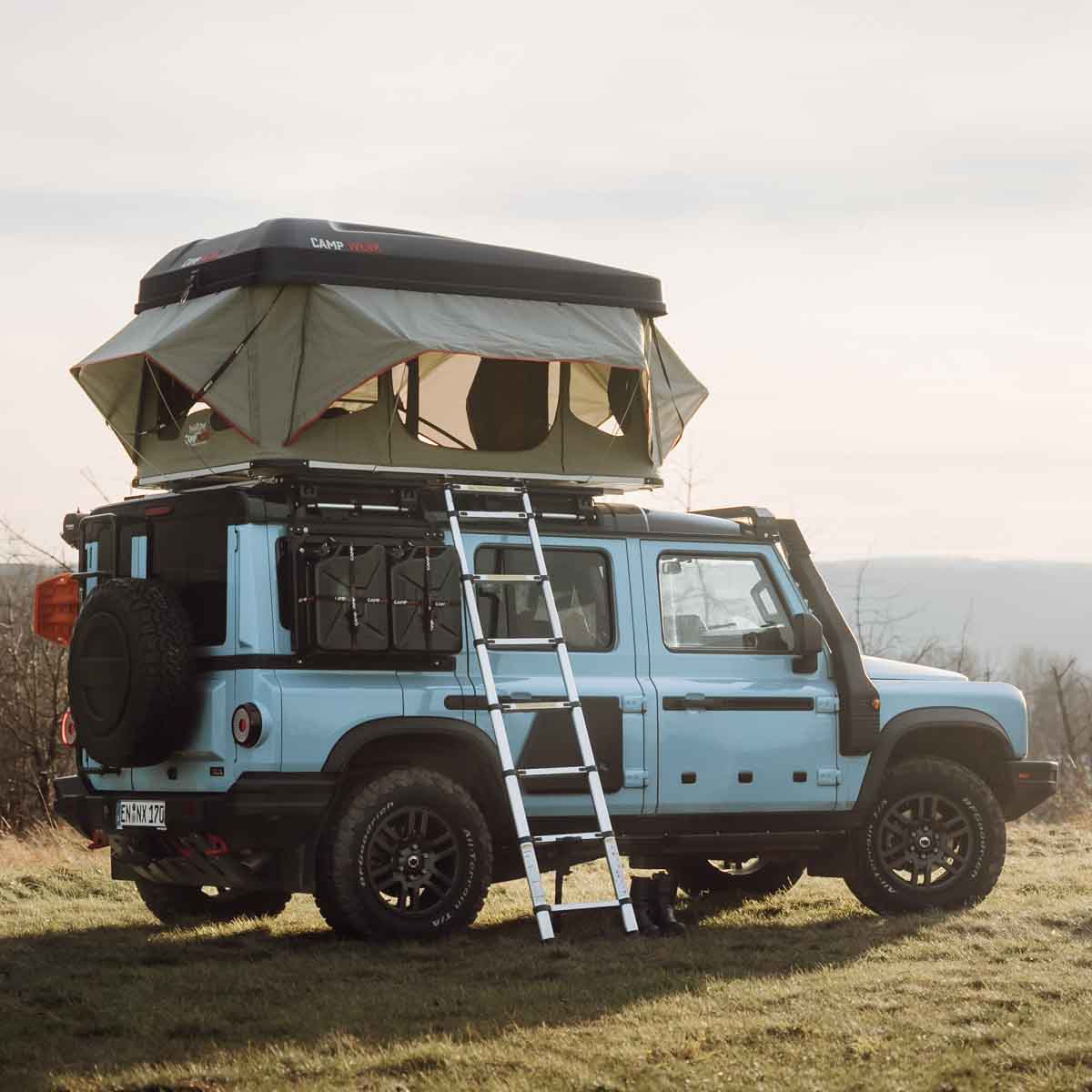
Selecting a Roof Tent: What You Need to Consider
Before you buy a roof tent, there are a few important points that you should definitely consider to ensure that you choose the right tent for your vehicle:
🚗 Check the roof load of your car
The first step is to determine the roof load of your vehicle. You can find this in the owner’s manual of your car. The roof load indicates how much weight your vehicle roof can carry without affecting the stability of the vehicle or the handling. Make sure you include both the weight of the roof rack and the roof tent in your calculation.
🏕️ Adjust tent size
Consider how many people will use the tent and choose a tent that is suitable for the number of people and at the same time takes into account the weight of the roof load.
⚖️ Consider weight and pack size
Even if you have a roof load that gives you enough leeway, you should consider the pack size and weight of the roof tent. Even if all models are folded relatively compactly, roof tents vary in size and weight. Make sure you choose a tent that can be easily transported on your vehicle without exceeding the roof load.
🛠️ Check mounting options
Check whether your car has the necessary mounting points for the roof racks. Some vehicles have special roof rails or roof moldings to which the rack can be mounted. Make sure that the rack and the tent can be properly attached to your vehicle and that no additional adjustments are required.
What Roof Racks are Available for Roof Tents?
There are different types of roof racks that can be used to mount a roof tent. The choice of the right roof rack system depends primarily on your vehicle type and the roof construction . Make sure that the rack is suitable for the roof load of your vehicle, the weight of the roof tent and the mounting options on your car roof. Only if these factors are taken into account can the tent be mounted safely.
The most Common Types of Roof Racks are:
- Cross member
Crossbars are the most commonly used roof racks and are suitable for almost any vehicle. They run across the roof and are attached via special mounting points or a pre-installed roof rail. If neither is available, there are often special rain gutter attachments, which rest on the rain gutter and are usually clamped in the door frame of the vehicle.
- Platform
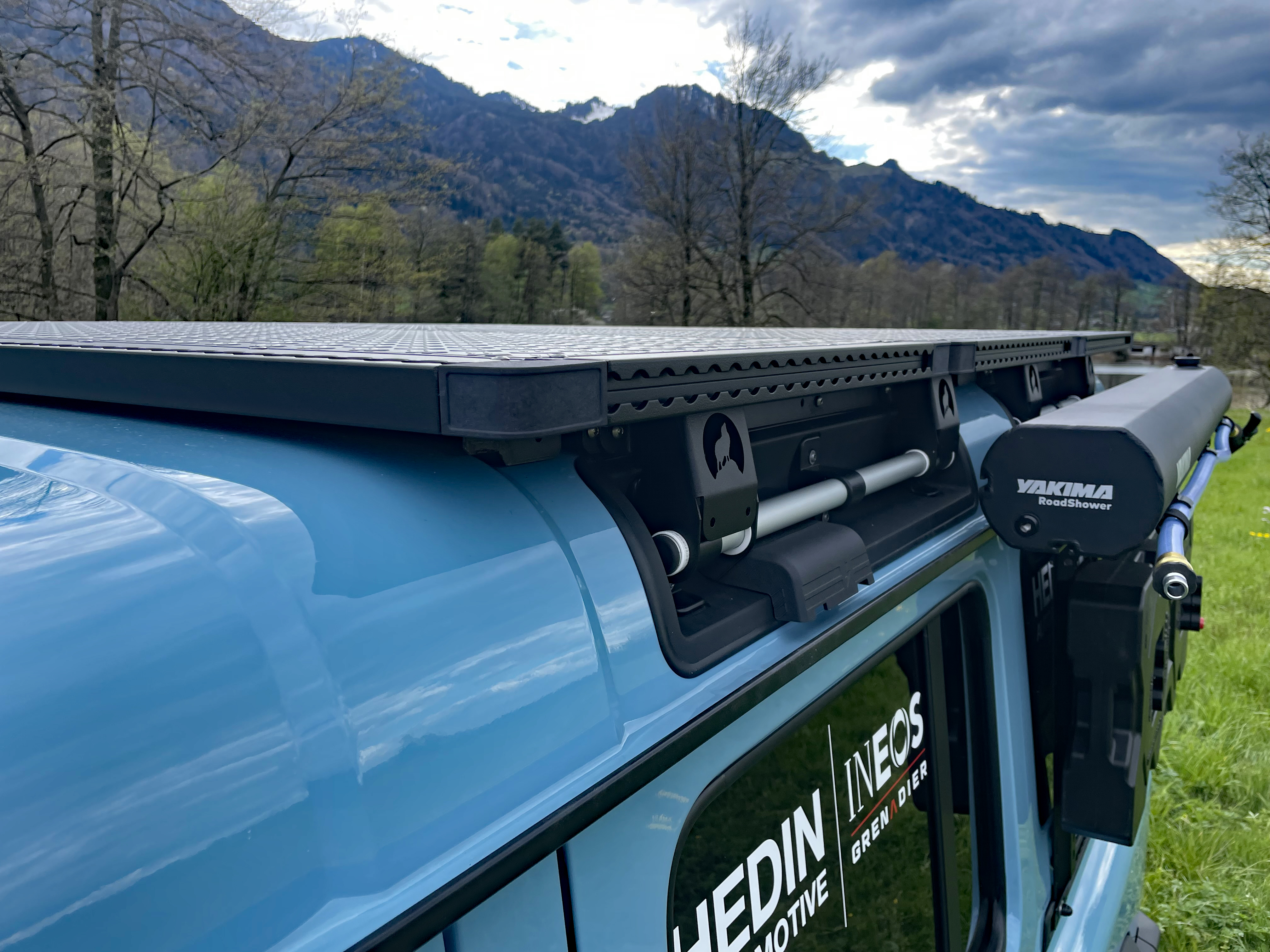
Platform racks offer a larger area and are particularly well suited if you want to transport additional equipment such as bicycles, skis or a larger roof tent. These racks are particularly stable and offer plenty of space for larger roof tents, but require careful selection to ensure that the tent is correctly attached.
p
Common Mistakes when Mounting Roof Racks for Roof Tents
When mounting your roof rack and roof tent, some mistakes can happen that endanger both the safety and the stability of your vehicle. If you don’t pay attention to the details when mounting the roof rack system, this can have serious consequences , which not only ruin your camping trip, but also result in expensive repairs and unexpected problems on the road.
Here are the most Common Mistakes to Watch out for:
⚠️ Miscalculation of the roof load
An incorrect assessment of the roof load can lead to overloading the vehicle roof. If the weight of the roof rack and the tent greatly exceeds the permissible roof load, this can lead to damage to the vehicle and impair stability when driving – especially during sudden braking maneuvers or fast curves.
⚠️ Incorrect attachment of the roof rack
A common mistake is an incorrect attachment of the roof rack system. If the rack is not mounted correctly on the car roof, it can loosen or even detach while driving. This poses an enormous danger – especially at high speeds. An insecurely mounted rack leads to instability and, in the worst case, can throw off the roof tent while driving, which can lead to accidents.
⚠️ Incompatible roof racks
If the roof rack is not compatible with your vehicle, it cannot be properly attached. This endangers the stability of the rack and the roof tent. The rack could move or even slip completely off the vehicle roof while driving. Such mistakes have fatal consequences, as they can lead to loss of the tent and, in the worst case, to accidents on the road.
⚠️ Poor bolting and insufficient fixation
If the bolting of the roof rack is not done correctly, the rack will not remain stable. Insufficiently tightened screws or poor fixation cause the roof rack to sway, loosen or tilt at high speeds or strong winds. This can lead to a loss of control on the highway, which is extremely dangerous. Regular inspection and tightening of the screws are essential to minimize this risk.
⚠️ Missing check before departure
Don’t blindly rely on the roof rack being tight – check it!A short shake test before each trip is enough. This simple measure prevents 99% of all damage and installation errors – and costs you less than five seconds. Even if the roof rack was installed by a specialist company: The responsibility for the check lies with you! Only you can ensure before the trip that everything is tight.

How to Mount the Roof Rack for your Roof Tent
The installation of your roof rack for the roof tent is crucial to ensure that the tent remains stable and secure on your vehicle while driving. A proper installation not only ensures that the tent sits firmly on the vehicle roof, but also minimizes the risk of damage to the vehicle or the tent and ensures that you maintain the necessary safety and stability on every trip. Only if the roof rack is properly installed can you rely on the tent being well secured on every trip and you can enjoy your camping adventure without any problems.
Follow this Step-By-Step Guide to Avoid Mistakes:
1️⃣ Get tools
After you have selected the right roof rack, get the necessary tools. Usually you need a wrench, possibly a drill (if the vehicle does not have pre-drilled holes) and the appropriate screws that are compatible with the roof rack.
2️⃣ Park the vehicle on a level surface
Make sure your vehicle is on a level surface before you start the installation. This ensures that you ensure the correct alignment and stability when attaching the rack.
3️⃣ Follow the installation instructions
The installation of the roof rack differs depending on the vehicle and rack type. Read the instructions carefully and follow the step-by-step instructions. Make sure you use the right equipment, especially the right screws and tools, to secure the rack.
4️⃣ Align and attach the rack
Place the roof rack on the vehicle roof and align it parallel to the vehicle. Depending on the vehicle model and roof rack type, you must attach the rack to the roof rail or other fixed points. Make sure that the rack sits evenly and firmly.
5️⃣ Secure the attachment
Tighten all screws evenly, but be careful not to overtighten them. Overtightening can cause the screws to be damaged or the attachment to no longer be secure.
6️⃣ Control at the end
At the end of the installation, check the stability and alignment of the rack. Carefully test whether the rack is tight and does not move. A final look at all attachment points ensures that the rack is installed correctly and safely.
Attach the Roof Tent to the Roof Rack
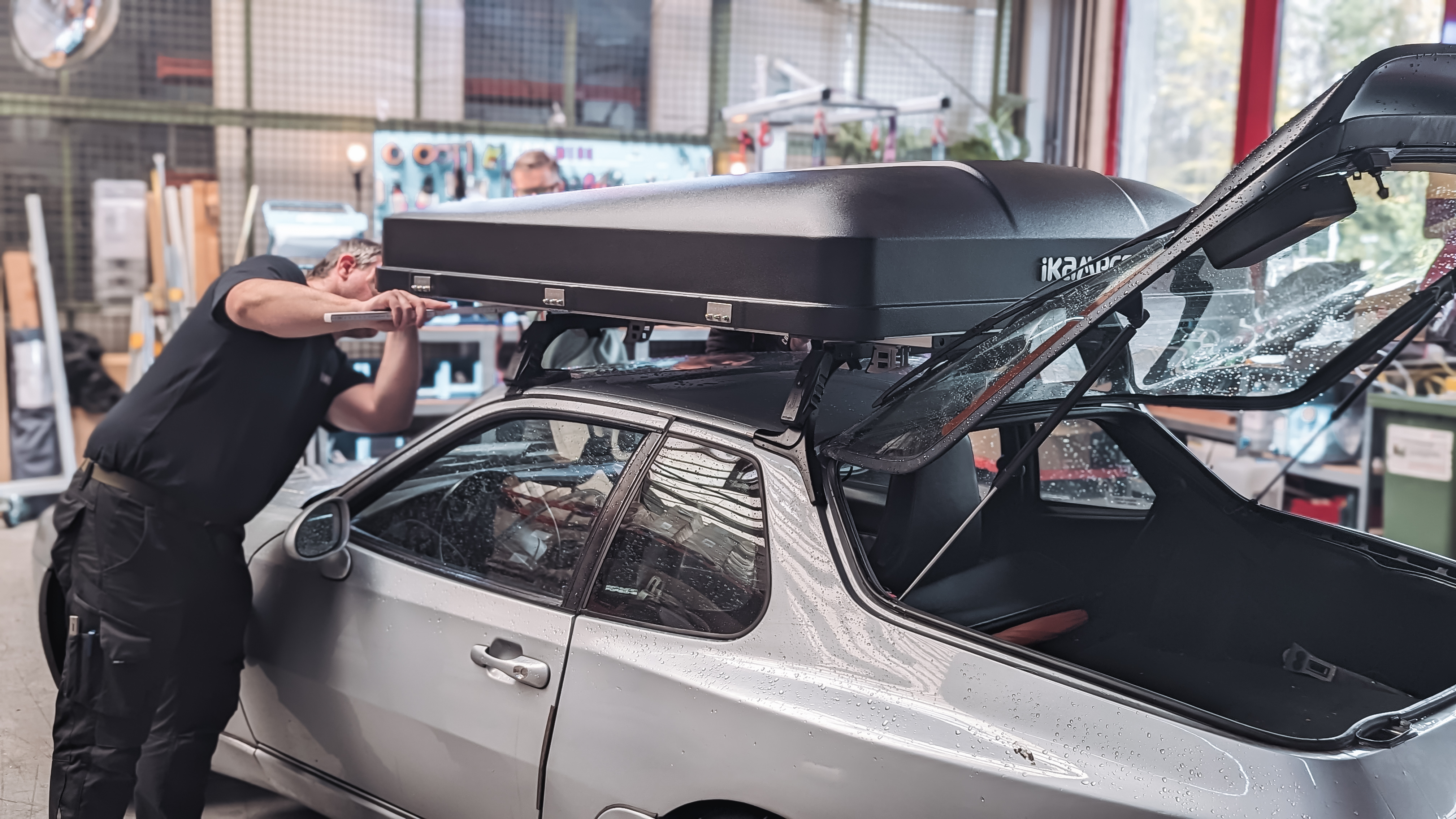
Now that your roof rack is securely and stably mounted, the last step is to attach the roof tent. This step is crucial to ensure that the tent remains secure on your vehicle while driving and that no problems occur. The correct attachment not only prevents the tent from slipping or detaching while driving, but also helps to ensure the stability and safety of your vehicle on the road.
Follow these Steps to Mount the Roof Tent Safely:
1️⃣ Slide the roof tent onto the rack
Start by carefully sliding the roof tent onto the roof rack. Make sure that it sits evenly on the rack, that the floor mounting of the tent matches perfectly with the rails of the rack and that the tailgate can still be opened sufficiently.
2️⃣ Fix
Once the roof tent is positioned correctly, attach it firmly to the rack. Depending on the rack system, different mechanisms are used for fixing, be it by screws, latches or special clamps. Make sure that all attachment points are properly closed so that the tent remains stable.
3️⃣ Final inspection
Perform a thorough final inspection to ensure that everything is tight. Check especially the attachment points and the alignment of the tent. Retighten all screws if necessary and make sure that nothing is loose.
Legal Regulations for Roof Racks and Roof Tents
When installing your roof rack and roof tent, you should pay attention to some important regulations to be safe on the road and avoid possible risks. This not only protects your safety, but also prevents possible damage to the vehicle or unpleasant surprises on your trip.
Here are the most Important Points to Keep in Mind:
- Roof load of your vehicle
The roof load of your vehicle is a manufacturer-specific recommendation and not a legally defined limit. This means that there is no legal regulation that prescribes an exact roof load. The specified roof load is a recommendation from the vehicle manufacturer as to how much weight can be safely transported on the roof. However, it is more important that you ensure that the load is properly distributed and that the vehicle is not overloaded. - Load securing and permissible total mass of the vehicle
Load securing and the permissible total mass of the vehicle are regulated by law. It is crucial that the roof tent is securely fastened and does not exceed the total capacity of the vehicle. Otherwise, overloading the vehicle could lead to fines. However, these penalties do not depend directly on the roof load, but on the general overloading of the vehicle, which can lead to hazards. For example, fines for overloading the vehicle can be up to 100 euros, and points could be awarded in Flensburg. - Visibility and steering freedom
The roof tent must not restrict the driver’s visibility or the steering behavior of the vehicle. The vehicle height must also be taken into account to avoid getting stuck in tunnels or under bridges. - Insurance
In some cases, you must register your roof tent with the insurance company, especially if you exceed the roof load or have modified the vehicle. It is important to report these changes to your insurance company in good time to be covered in the event of damage.➡️ Note:
The roof load is not a legally defined limit, but a recommendation from the vehicle manufacturer. In many countries, the roof load does not play a role at all, but only the load-bearing capacity of the roof rack is taken into account. This means that there are different regulations for the permissible weight on the vehicle roof depending on the country. It is worth knowing the specific regulations for your country before you go on long journeys.

Additional Equipment for your Roof Tent Roof Rack
In addition to the roof tent, you can attach some other useful camping equipment to your roof rack to make your trip more comfortable and practical. This way you can ensure that you have everything you need during your adventure without having to rely on space inside the vehicle.
Here are some Additional Equipment You might Consider:
- Solar panel:
A solar panel on the roof rack is a great way to generate environmentally friendly electricity while you are on the road. Especially on longer trips without access to power sources, you can use it to charge electronic devices such as cell phones, laptops or refrigerators – without being dependent on power connections.
- Light bars or LED lights
With a light bar or LED lights, you not only ensure more visibility at night, but you can also sufficiently illuminate your campsite in the dark. These lights are energy-efficient, durable and easy to install. So you always have enough light to enjoy the evening outside or to set up everything quickly and easily when you arrive at the camp.
- Ski or bike rack
If you enjoy doing sports on your travels, ski racks or bike racks are perfect additions to your roof rack. These racks allow you to safely transport your sports equipment on the roof, be it a bicycle, a snowboard or skis. This leaves the interior of your vehicle free for other luggage, and you are always ready for the next sporting challenge.
- Awning
An awning is particularly useful if you need additional protection from the sun or rain at your campsite. It creates a comfortable area for relaxing, cooking or for outdoor meals. Most awnings can be set up and taken down quickly and offer you the necessary protection so that you can get the most out of your trip, no matter what the weather.
❗Important:
If you want to attach additional equipment to your roof rack, make sure that the total weight of the roof rack and equipment does not exceed the permissible roof load of your vehicle. A slight exceedance of 2-3 kg is usually unproblematic for most vehicles, but may lead to damage to the vehicle under certain circumstances.
💡Tip:
If you are transporting several valuable pieces of equipment on your roof, a theft protection for the roof rack is a useful addition. This way you can ensure that your equipment remains safe even during stopovers and is not removed without authorization.
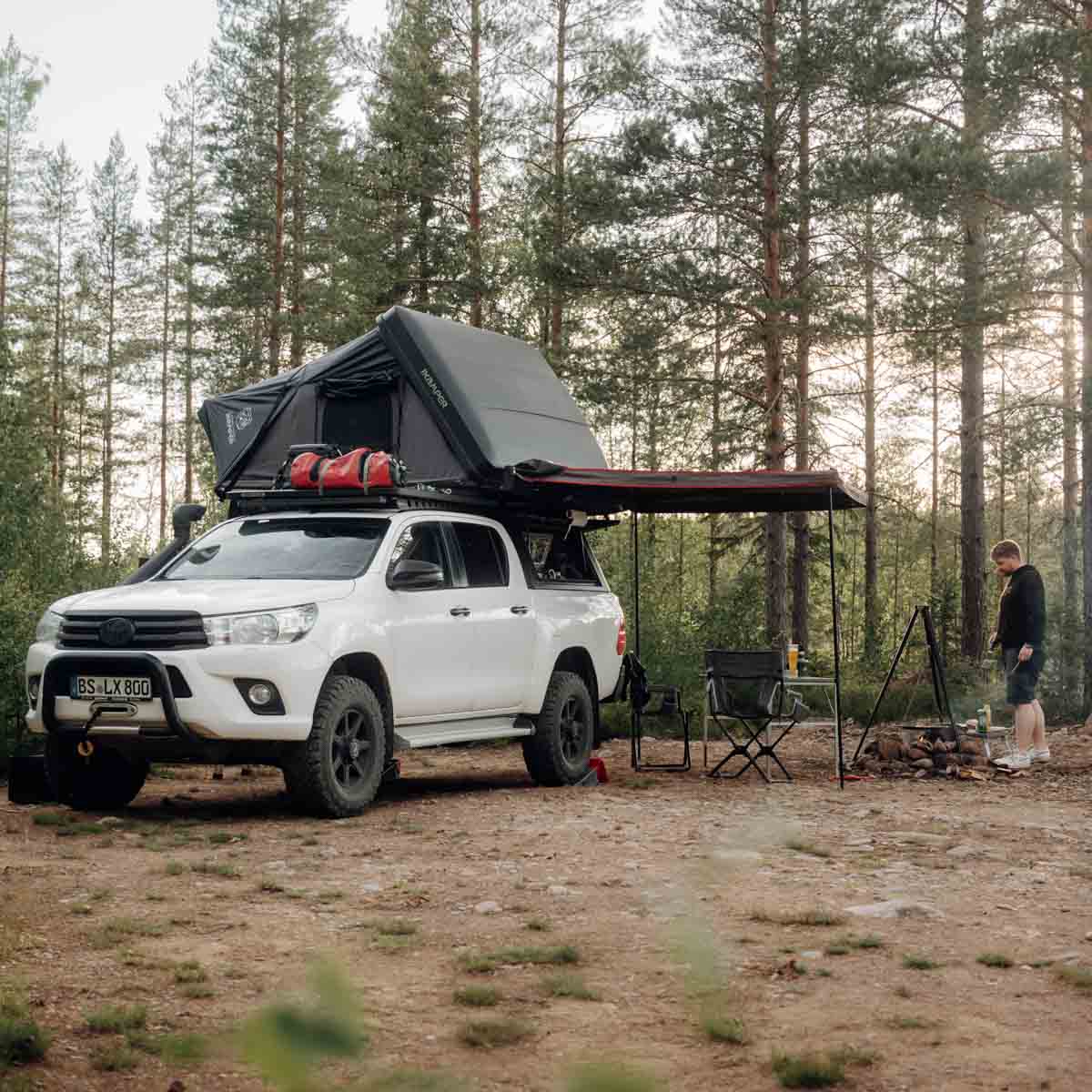
Have the Roof Rack for the Roof Tent Mounted Yourself or Professionally?
If you want to mount your roof rack for the roof tent, you basically have two options: You can do the installation yourself or have the roof rack professionally installed. Both options have their respective advantages and disadvantages, which you should carefully consider before making a decision. The self-assembly saves costs, but requires the right tools and a suitable installation location. A professional installation involves additional costs, but ensures more safety and less effort.
In the following table you will find a clear presentation of the advantages and disadvantages of both options:
Option | Advantages | Disadvantages |
Self-assembly | ✅ No costs ✅ You can choose the time yourself | ❌You have to get tools ❌You need a suitable installation location ❌The risk of errors during attachment is higher |
Professional installation | ✅ No tools needed ✅ You don’t have to worry about the installation location ✅ safer setup ✅ Guarantee of secure attachment | ❌Chargeable |
When installing your roof rack for the roof tent, safety comes first. If you decide to self-assemble, there is a higher risk of errors that can endanger the driving behavior and stability of your vehicle. If the roof load is exceeded or the carrier is not installed correctly, there is not only a risk of fines, but also that your insurance may not pay in the event of damage. In addition, an incorrectly attached roof tent at high speeds or during quick maneuvers can cause the vehicle to sway or lose control. This is not only dangerous, but can also lead to high repair costs.
A professional installation ensures that the roof rack and the tent are firmly and securely attached to your vehicle, which gives you the necessary security to be on the road without worries.
At CAMPWERK, the largest roof tent expert since 2010, you will not only receive all the accessories, but you also have the option of having your roof rack and roof tent professionally installed. During the installation, you can relax and enjoy a coffee in the Showroom and receive an instruction. This way you can be sure that everything is perfectly installed and you can fully concentrate on your adventure – without the effort and uncertainties of self-assembly.
Visit our shop now and find your roof tent + accessories.
How exactly does the installation of a roof tent work? You can’t really imagine how the whole thing is actually done? Then take a look at the following video, in which the roof tent installation is carried out and shown on a VW T6:
Conclusion: this is how the Safe Installation of your Roof Rack for Roof Tents Succeeds
The correct installation of your roof rack is crucial to ensure that your roof tent remains firm and stable on your vehicle while driving. Proper attachment prevents the tent from coming loose or slipping, so you can concentrate on the road while driving. Only if everything has been installed correctly can you be sure that your roof tent will remain securely in place throughout the journey, whether on the highway or on less traveled roads.
Make Sure that You:
- ⚖️ Keep an eye on the roof load and ensure that the weight of the roof rack and the roof tent does not exceed the permissible roof load of your vehicle.
- 🚗 Adjust the speed and be aware of how a roof tent can affect driving behavior – especially at high speeds.
- 🔧 Avoid errors during installation by carefully following all steps and paying attention to a stable and secure attachment – or even better: have a professional take over the installation.
A professional installation ensures that the carrier and the tent are correctly attached. This not only guarantees the safety, but also fulfills the legal requirements. With a professional installation, you avoid legal problems and additional costs, so you can start your camping adventure without worries.
CAMPWERK ensures that you can not only count on the correct installation of your roof rack and roof tent, but also on practical camping accessories for your adventure. Whether you need a solar panel for power, LED lights for the evening or a bicycle rack for sporting activities – at CAMPWERK you will find everything you need for your camping trip. While the experts at CAMPWERK professionally install the roof rack, you can relax and enjoy a coffee in the Showroom and get a comprehensive instruction. This ensures that everything is installed smoothly and safely, and you can start your trip stress-free and without worries.
Learn more about our roof tents now and find the right model for you.
Frequently Asked Questions about the Installation of Roof Racks for Roof Tents
1. Can I mount a roof tent on any vehicle?
Yes, in principle a roof tent can be mounted on most vehicles, as long as you have the right roof racks. Some vehicle types require special roof racks or roof rails. Therefore, you should make sure that your car is suitable for this before you buy a roof tent.
2. How do I determine the appropriate roof load for my vehicle?
The roof load of your vehicle can be found in the operating instructions or in the vehicle registration document. It indicates how much weight you can safely transport on the roof. This includes the roof rack and the roof tent.
3. What happens if the roof load is exceeded?
A slight exceedance of the permissible roof load by 2-3 kg is usually unproblematic for most vehicles. Nevertheless, it can lead to damage to the vehicle. A significantly exceeded roof load can negatively affect driving behavior: At high speeds, the vehicle can become unstable or react worse in curves, which endangers safety.
Tip: There are simple ways to reduce the roof load. For example, the removable ladder can be transported separately in the trunk, which makes the vehicle more stable and reduces the load on the roof.
4. What is the difference between crossbars and platform carriers?
- Crossbars are the most common choice and are suitable for almost any vehicle. They are attached via special mounting points or to a pre-installed roof rail and offer a stable base. If neither is available, there are alternative attachments that rest on the rain gutter and can be clamped into the door frame of the vehicle.
- Platform carriers offer more space and are particularly suitable for larger roof tents or additional equipment.
5. Which roof racks are suitable for my vehicle?
The choice of roof rack depends on your vehicle type and the roof construction. You must ensure that the carrier does not exceed the roof load of your vehicle and fits the mounting options on your vehicle. At CAMPWERK you will find a large selection of suitable roof racks and you can also get advice from our experts to ensure that the carrier is optimally suited to your vehicle and your roof tent.
6. Which roof racks are suitable for my vehicle?
To avoid errors, you should observe the following steps when mounting the roof rack:
- Check the roof load of your vehicle.
- Get the right tools (wrenches, screws, etc.).
- Make sure that all screws are tightened firmly, but not overtightened.
- Test the stability of the roof rack after installation.
If you want to be on the safe side, you should have the installation carried out by a professional like CAMPWERK. This ensures that everything is installed correctly and safely.
7. Which roof racks are suitable for my vehicle?
- Miscalculation of the roof load, which can overload the vehicle.
- Incorrect attachment of the carrier, which can cause it to come loose while driving.
- Uneven weight distribution, which can negatively affect driving behavior.
- Poor screwing, which leads to instability, especially at high speeds.
- Lack of control before departure to avoid 99% of damage and installation errors.
8. How long does it take to mount a roof rack for a roof tent?
The duration of the installation depends on your vehicle and the carrier model. A professional installation at CAMPWERK usually takes 1-2 hours for crossbars, depending on the complexity. For a platform carrier, the installation is more complex and takes 3-5 hours depending on the manufacturer. Self-assembly can take significantly longer, especially if you have little experience.
9. Should I mount the roof rack myself or hire a professional to do it?
Although self-assembly saves costs, it requires the right tools and careful execution. If attached improperly, the roof tent could be mounted insecurely, which could compromise safety. If you want to be on the safe side, it is better to have the installation carried out by a professional like CAPWERK. This way you can be sure that everything is installed correctly and that you are legally on the safe side.
10. What advantages does a professional installation at CAMPWERK offer?
At CAMPWERK, our experts have been taking care of the assembly of your roof rack and roof tent since 2010. So you can be sure that everything is properly and safely attached. During the assembly, you can relax and enjoy a coffee in the Showroom and receive an introduction so that you know exactly how everything works. In addition, we offer high-quality accessories such as solar panels, LED lights, and bicycle carriers to make your camping trip even more enjoyable.
11. Do I have to register the roof tent with my insurance company?
No, you usually do not have to register your roof tent with the insurance company, as it is a load. Depending on the insurance tariff, however, it can be an advantage if the roof tent is registered as a load in the event of theft.


